Why the Walk Is the Point
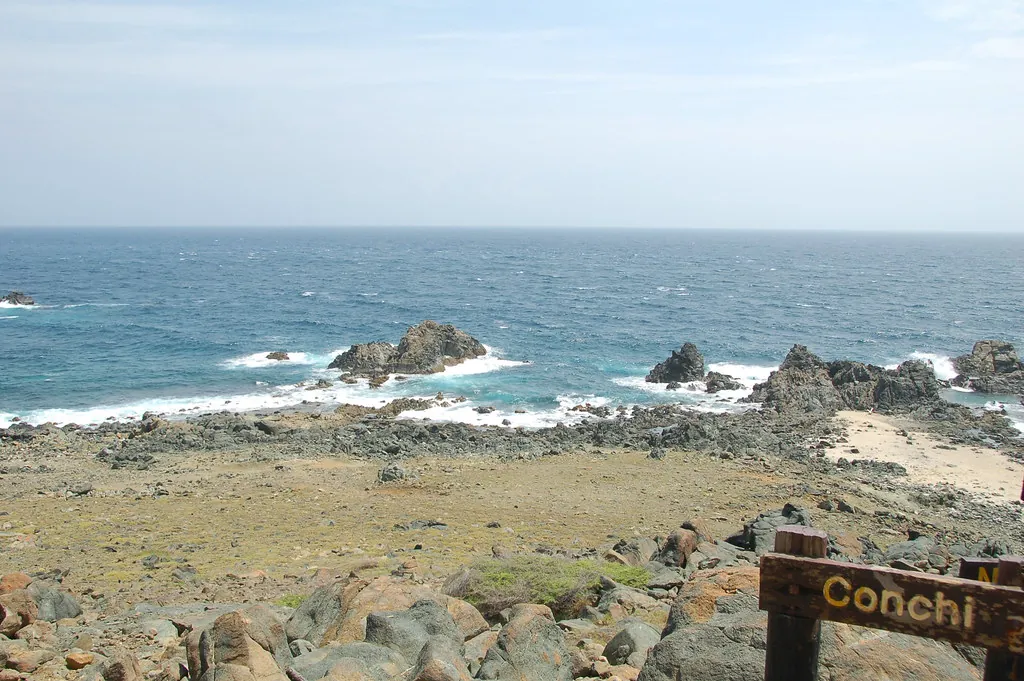
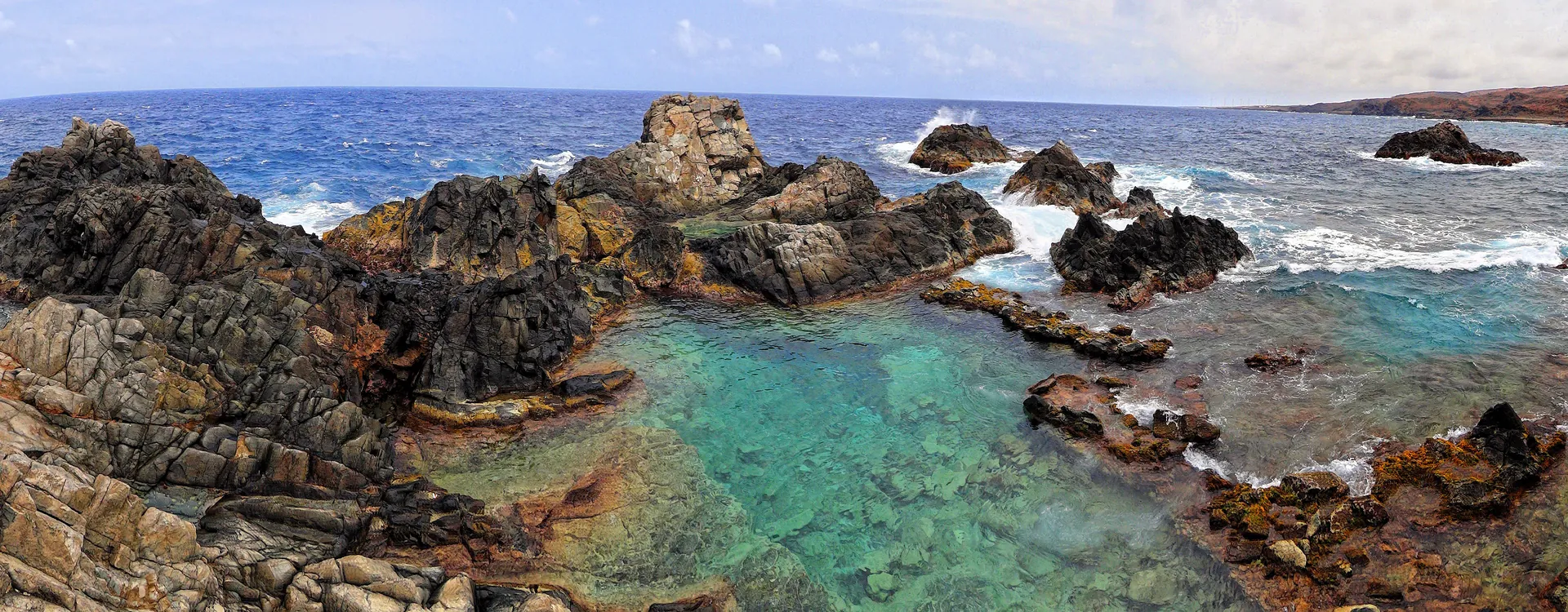
The north coast announces itself before you see anything. Salt haze hangs over the volcanic shelf, waves slam into rock somewhere below the horizon line, and the trade wind pushes the smell of brine and dust into your face. Then the track bends, the ground drops away, and there it is: Conchi, which means shell in Papiamento, so think nature’s own shell pool, a bowl of green-blue water trapped inside a ring of dark stone.
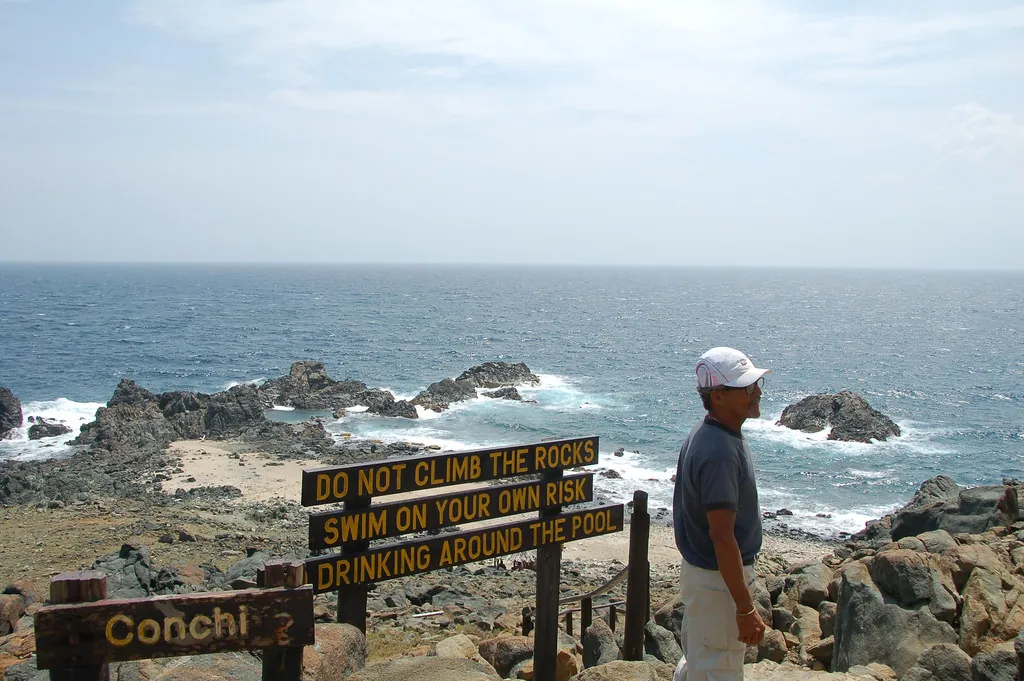
No road reaches the lip of the pool. That single fact shapes every visit, whether you roll up in a rented 4×4, ride in on the back of a tour jeep, or arrive on your own two feet. The engine stops, the doors open, and everybody finishes the last stretch on foot, down the same rocky steps with the same view opening in front of them. The hike is not an alternative to the drive. It is the final chapter of it.
The walking routes through Arikok sit under the care of the Arikok National Park Foundation, and you can check current trail conditions, opening hours and any closure notices on the official park website before you commit to a plan. Do that check the night before, not on the morning itself, because park staff sometimes shut the north coast tracks after heavy swell.
Three Ways to Start the Hike
Three trailheads do the real work, and they suit very different people.
Natural Pool Trailhead Lot
The 4×4 track ends in a gravel car park above the coast, and from there the pool is a short, steep drop of roughly 500 metres to a kilometre. This is the one for drivers, tour groups and anyone with limited time or wobbly knees. Details on parking bays and vehicle rules live on our 4×4 drive and parking guide.
San Fuego Visitor Center
The park’s main gate at San Fuego gives you the full cross-country walk, four to five kilometres of rolling limestone and dust to the pool. It rewards an early start and a reasonable level of fitness. Tour pickups and taxi drops to the gate are covered on our transport hub.
Daimari Side
From Daimari Ranch on the north coast, a shoreline path runs east toward Conchi. It is the quietest approach and the most demanding, with rock-hopping sections that punish sandals and light trainers. You still need a 4×4 or a guide to reach the ranch itself.
Distances, Times and Grading at a Glance
Treat these as honest working figures rather than survey data. Heat, wind and how often you stop for photos will shift the numbers by twenty minutes either way.
| Route | One-way distance | One-way time | Terrain | Who it suits |
|---|---|---|---|---|
| Trailhead lot to pool rim | 500 m to 1 km | 10 to 20 minutes | Rocky steps, loose gravel | Almost anyone steady on their feet |
| San Fuego Visitor Center to pool | 4 to 5 km | 1 hr 15 to 2 hrs | Rolling limestone, thorn scrub, some loose basalt | Fit walkers, early risers, people with two litres each |
| Daimari Ranch to pool | 3 to 4 km | 1 hr 30 to 2 hrs | Coastal rock-hopping, uneven shelf | Confident hikers with grip soles |
The Short Route: From the Trailhead Lot to the Rim
If you are driving in or being dropped by a tour, this is the walk you will do. It is short, but it is not flat and it is not paved.
- Leave the car park on the marked path heading downhill toward the sea. Ignore the faint goat tracks that cut sideways across the slope.
- The first section is wide and gravelly, easy going, with the coastal shelf opening up on your left.
- Around halfway the path narrows into rough basalt steps, worn smooth in the middle by thousands of sandals. Take them slowly, especially on the way back up.
- The pool reveals itself all at once, tucked behind a rock arch, with spray misting the air on a lively day.
- Descend to the flat ledge beside the water and stash your bag against the rock wall, well above the tide line and out of the wind tunnel.
- Do the walk back up in the cool of the late afternoon if you can, or in the morning before ten. Midday here is a different sport entirely.
The Long Route: San Fuego Visitor Center to Conchi
The full park walk starts at the San Fuego gate, where you pay your entry and pick up a paper map. From there the path rolls northeast through thorn scrub and stands of divi-divi, gaining and losing height in short bursts rather than one long climb. There is very little shade once you are past the first ridge.
Mount Arikok tops out at 188 metres, the highest point in the park, and it appears on the skyline for much of the walk without ever being the destination. The trail runs below and around it, past old plantation walls and a couple of small ruins, before turning seaward toward the coast.
Start by 7am or not at all. By eleven the limestones are radiating heat back at your shins, and the return leg, which climbs gradually for the last two kilometres, becomes the hardest part of the day. Carry more water than you think you need, and read our visitor rules and guidelines for the full safety code before you set off. Access options and pickup points from Santa Cruz and Oranjestad are laid out in the transport guide.
The Daimari Approach
Daimari Ranch sits on the north coast road, and the trail east from there hugs the shoreline before cutting inland to reach Conchi from the opposite direction to everyone else. It is the least-used approach, which is its appeal and its problem. Fewer feet mean fainter trails, and the rock-hopping stretches near the halfway point demand more than trainers can give.
You need a 4×4 or a guided vehicle to reach the ranch, so this route only makes sense if you already have wheels or you have booked a walking tour that starts there. Join the path with a full bottle, a hat and a clear plan for turning around if the swell looks heavy. The coastal shelf gets slick when spray is blowing.
Terrain, Elevation and How Rough It Really Is
Aruba’s “moderate” is a specific thing, and British walkers used to Dartmoor or the Lakes will find it strange at first. There is no mud, no bog, no root-strewn forest floor. What you get instead is volcanic rock underfoot, loose gravel that rolls beneath the boot, limestone shelves that feel solid until they do not, and thorn scrub at shin height that scratches through light trousers.
Handrails do not exist here. Neither do warning signs at every drop. The park trusts you to look after yourself, and that trust is genuine rather than careless. The elevation change on the long route is modest, perhaps eighty metres of cumulative climbing, but the sun and wind do the work that gradient would do on a cooler island.
Nobody rates a walk by its distance here. They rate it by how much water they carried and whether they made it back before the heat.
Sun, Wind and Heat: The Real Difficulty
The honest difficulty of the Conchi hike has nothing to do with steepness. It has everything to do with heat, exposure and the trade wind that dries your skin while it fools you into thinking you are not sweating. Shade is almost nonexistent past the first ridge at San Fuego. On the short trailhead route you will find a little relief in the rock arch at the pool, but that is it.
Two litres per person is the working minimum for the long route, and three is not excessive in July or August. Wind makes dehydration sneak up on you. Drink on a schedule rather than waiting for thirst, and turn back if you feel light headed, queasy or suddenly cold.
Markers, Cairns and Getting Misplaced
Waymarking in Arikok is light. You get painted posts at the main junctions, occasional stone cairns on the open slopes, and that is about the sum of it. Past the ridge above San Fuego the markers thin out, and on the Daimari coastal stretch they vanish for long sections where the route is really just the obvious line along the shelf.
Cairns are there to guide, not to decorate. Leave them alone, and do not build new ones, because a well-meaning pile of stones in the wrong place sends the next walker off the trail. Phone signal drops in and out across the park, and it tends to die entirely in the valleys. Download an offline map before you leave your hotel.
Turning back is a valid plan, not a failure. If the heat is winning or the trail has gone vague, retreat to the last clear marker and take the way you came. The pool will still be there next time.
What to Wear and Carry
Kit for this walk is simple but non-negotiable. Get it wrong and the day goes badly.
- Closed-toe shoes with real grip. Trainers work on the short route. The long and Daimari routes want trail shoes or light boots.
- Water shoes or amphibious sandals for the pool entry itself, because the rock ledge at the water is sharp.
- Two litres of water per person minimum, three on the long route in summer.
- Reef-safe SPF 50, applied before you start and reapplied at the pool. Aruba’s sun is unforgiving and the wind hides the burn.
- A wide-brimmed hat and a buff, because the trade wind kicks up dust on the exposed sections.
- A few snacks, salty rather than sweet, for the return leg.
- A battered GoPro or phone in a waterproof pouch. Salt spray and fine sand get into everything, and a dry bag is cheap insurance.
Hiking vs 4×4, ATV and Horseback
The comparison is not about which is better. It is about what you are willing to trade.
| Option | Cost per person | Effort | Dust | Guidance | Weather sensitivity |
|---|---|---|---|---|---|
| Hike from trailhead lot | Park entry only | Low | Low | Self-guided | High in midday heat |
| Hike from San Fuego | Park entry only | High | Moderate | Self-guided | Very high |
| Self-drive 4×4 | Rental plus fuel | Low | High | Self-guided | Moderate |
| Guided jeep tour | Around €55 to €115 | None for driving | Depends on seating | Full guide | Low |
| ATV or UTV tour | Around €85 to €320 | Moderate, you drive | Very high | Guide-led convoy | Low |
| Horseback from Daimari | Around €100 and up | Moderate | Moderate | Guide-led | Moderate |
Do not hike the long or Daimari routes if you have heart or breathing conditions, if you are pregnant, if you are travelling with very young children, or if you have no tolerance for heat. Book a guided jeep instead, and let somebody else do the driving while you enjoy the coast from a shaded seat. Prices and live availability sit on our tickets and tours page.
How Long Does the Hike Take?
A realistic round trip from the trailhead lot, including a swim and a few minutes on the ledge, is about ninety minutes to two hours. The walk itself is twenty minutes each way for most people, the descent shorter than the climb back up, and the rest of the time disappears into the pool and the photographs.
From San Fuego, plan on three and a half to five hours door to door. Two hours walking in, an hour in the water and on the rocks, and an hour and a half back with the sun on your neck. The Daimari approach runs about four to five hours round trip because of the rock-hopping sections, which are slow in both directions.
Add time if you are visiting in high season, when the trailhead lot fills and the short descent can queue behind tour groups making their way down the steps. Aim to be at the pool before ten in the morning if you want it to yourself.
Can You Walk to the Natural Pool?
Yes, you can walk to the Natural Pool, and everybody does the final stretch on foot whether they hiked in or arrived by vehicle. There is no road to the pool lip and there never will be, since the north coast here is protected parkland and the terrain rules out any sensible alignment.
The easiest walking option is the short trail from the trailhead lot at the end of the 4×4 track, which takes twenty minutes or less each way. The longest is the San Fuego walk, four to five kilometres over exposed limestone. Both finish on the same rocky steps down to the water. Bring grip-soled shoes on either route, and check our swimming and depth guide if you plan to get in once you are down there.
Is the Hike Worth It?
For fit walkers with an early start and two litres of water each, the San Fuego hike is one of the best things you can do on the island. You earn the pool. You arrive sweaty and quiet, and the water feels colder and better than it has any right to, and the crowd that came up by jeep looks at you differently when they realise you walked there.
For families with small children, for anyone travelling in the peak heat of August, and for visitors who want the pool without the dust and effort, a guided jeep tour is the honest answer. You still get the same view, the same swim and the same final descent on foot. What you miss is the quiet of the trail before the first convoy pulls into the lot. What you gain is a shaded seat, a driver who knows the ruts, and air conditioning on the way home.
The trade for walking to Conchi is simple: dust in your shoes, salt in your hair, and the pool at the end of it belonging, for a few minutes, entirely to you.
Rules and Safety Before You Set Off
Aruba’s national park runs on a small set of clear rules, and they exist to protect the coastline as much as the visitors. Read them properly before you lace up. Our visitor rules and guidelines cover the full code, from the no-lifeguard position at Conchi to drone restrictions and the separate status of the closed Cave Pool.
Tell somebody where you are going and when you expect to be back. Take a charged phone. Respect the park closing times, which are enforced at San Fuego.
If the walking plan is starting to look like more effort than you want on holiday, that is a perfectly sensible signal. Guided options from Oranjestad, Palm Beach and Eagle Beach include transport, a driver and a guide, and they still finish with the same short walk down to the water.
For planning the rest of the trip around Arikok, the Aruba Tourism Authority keeps an up-to-date events calendar and seasonal weather notes, and the Government of Aruba publishes official visitor advisories and park notices that are worth a glance in the week before you travel.