Driving to Natural Pool (Conchi) is possible in a suitable high-clearance 4×4, but the journey across Arikok National Park is a proper off-road outing rather than a casual drive to the beach. From the entrance near San Fuego, the track winds across Aruba’s rugged interior towards the wild east coast, where jagged limestone, loose stones and exposed stretches demand patience behind the wheel. I live in Savaneta and regularly head out this way, and my advice is always the same: choose the vehicle before you choose the route, check your rental agreement before leaving the car park, and never assume that four-wheel drive automatically means you are insured to use it.
This guide concentrates on the practicalities of self-driving to Conchi Natural Pool in Santa Cruz, Aruba: vehicle suitability, rental restrictions, route choices, GPS, road hazards and the parking area above the pool. For a broader comparison of every way to reach the coast, including guided safaris and walking routes, see our complete Natural Pool transport guide.
Can You Drive to Conchi Natural Pool?
Yes, you can drive close to Conchi in an appropriate 4×4, using the unpaved roads through Arikok National Park, subject to current park access rules and road conditions. You cannot drive directly into the natural pool itself. Vehicles stop in a rough parking area above the coast, and the final descent is on foot along a rocky path and stone steps.
The distinction matters because the track is rough enough to catch out visitors who have hired a vehicle that looks adventurous but lacks the clearance or drivetrain for the terrain. A normal saloon, a low-slung hire car or a conventional two-wheel-drive crossover is a poor choice. Even some SUVs with impressive-looking bodywork struggle when the track crosses exposed limestone shelves and larger rocks.
Allow extra time for the drive, especially if you are unfamiliar with off-road conditions. Speeds are low, the surface changes repeatedly, and other vehicles may need room to pass. Once parked, expect a short but uneven walk down to the water, with a return climb that feels considerably warmer after a swim.
My rule for Conchi is simple: if the rental company has not explicitly approved the route, keep the keys out of the ignition until you have checked. A capable vehicle is only half the equation; permission and insurance matter just as much.
Choosing Your Route: San Fuego or the Northern Tracks
Most self-drivers should plan around the established park access from the San Fuego entrance, near Santa Cruz. Follow the current park directions and authorised route towards Conchi rather than trusting a navigation app to find a shortcut across the island’s northern back roads. Park access, signage and track conditions can change, so check the route with staff before setting off.
The San Fuego approach
The San Fuego entrance is the sensible starting point for a first visit. Once inside Arikok, you follow the designated park tracks, keeping an eye out for directional signs and marked junctions. The terrain remains rugged, but the established route is generally easier to follow than attempting to piece together an alternative through unpaved back roads.
Before driving through the gate, ask whether the road to Conchi is open and whether any sections are currently unsuitable for your vehicle. Heavy showers can leave soft patches or wash loose material across the track, while rough sections may become harder to negotiate as the day progresses and traffic builds.
The northern rocky approach
Routes approaching from the northern side can look shorter on a digital map, but the apparent saving in distance tells you very little about the driving involved. Some back-road sections are rougher, signage is less dependable and sharp limestone can punish tyres. I would leave unfamiliar shortcuts to experienced local drivers who know the current conditions and have permission to use those tracks.
If you are visiting Aruba for the first time, stick to the route confirmed by park staff. Experienced off-road drivers may be comfortable with more demanding terrain, but familiarity with a Jeep on paved roads does not automatically translate into good judgement on a narrow, rocky track.
Which Vehicles Can Reach Conchi?
The safest choice is a genuine off-road-capable 4×4 with adequate ground clearance, suitable tyres and a drivetrain appropriate for the terrain. Four-wheel drive alone is not a guarantee: tyre sidewalls, underbody clearance, approach angles and the driver’s experience all affect whether a vehicle can manage the route without damage.
These categories are practical guidance, not a guarantee that a particular model will be admitted or reach the trailhead. Vehicle specifications differ by year and trim, and park authorities may restrict access when conditions deteriorate. Rangers or gate staff can refuse access where a vehicle or driver is unsuitable, so do not treat entry as automatic.
A vehicle with high ground clearance can still scrape its underside if the driver takes a rock at the wrong angle. On exposed limestone, move slowly, choose your line carefully and avoid sudden steering inputs. If you are unsure whether a section is within your ability, turn around at a safe, authorised point rather than gambling with the vehicle.
Rental Car Restrictions: Read the Small Print
This is where many visitors make an expensive mistake. A rental desk may hand you the keys to a Jeep or 4×4-style SUV, but that does not mean the contract allows you to drive it through Arikok National Park. Some rental agreements prohibit unpaved roads, off-road use, gravel tracks or travel inside national parks, even when the vehicle itself is mechanically capable of handling them.
Read the contract before booking and ask the rental company to confirm in writing whether driving to Conchi via the authorised park route is permitted. If the answer is vague, ask specifically about unpaved park roads, tyre damage, undercarriage damage, towing and recovery. A verbal assurance at the counter may not protect you if the written agreement excludes the journey.
- Check the off-road clause: Search the terms for “unpaved roads”, “off-road driving”, “gravel” and “national park”. The exact wording matters more than the vehicle badge.
- Request written permission: Ask the provider to confirm that the named vehicle category may use the authorised route to Conchi. Keep the confirmation accessible on your phone.
- Read the damage exclusions: Tyres, wheels, the underbody, suspension and recovery costs may be excluded from standard cover or damage waivers.
- Check credit-card rental insurance: Card benefits commonly contain exclusions for off-road use or damage arising from prohibited driving. Confirm the precise terms with your card insurer.
- Ask about recovery: Find out who pays if the vehicle becomes stuck, suffers a puncture or needs towing from a remote park road.
Local rental operators may have vehicles specifically intended for authorised off-road use, but policies vary by company and vehicle. Ask for an explicit yes in writing, rather than assuming a local firm automatically permits every route. If no suitable, insured rental is available, a guided safari is the more sensible choice.
For current alternatives, compare the guided options on our Natural Pool tours and tickets page. If you are weighing up a rental against a transfer, taxi or organised excursion, the transport guide explains the broader access choices.
ATV and UTV Rules in Aruba
ATVs and UTVs are common sights on Aruba’s rugged northern coast, but their legal status and permitted routes are not identical. An ATV is generally an off-road vehicle rather than an ordinary road-legal quad, while a UTV may be registered for road use if it meets the relevant requirements. Registration, insurance, the correct driving licence and permission to enter a particular area still matter.
Do not assume that an ATV or UTV rental automatically includes permission to ride anywhere inside Arikok National Park. Rental operators and tour companies may restrict their vehicles to designated routes, and park rules can limit where motorised recreation is allowed. Confirm the current rules with both the rental provider and park staff before departing.
Self-drive rental or guided convoy?
A self-drive UTV gives you more control over your pace, stops and photo opportunities, but you take responsibility for the route, the vehicle and any damage that falls outside your cover. A guided convoy is often easier for visitors unfamiliar with the island’s tracks, as the guide can set the pace and explain which sections are suitable for the group. Compare the total cost, including deposits, insurance exclusions and passenger limits, rather than judging the rental by its headline price.
Noise and dust are part of off-road driving, but they are not a licence to tear across the landscape. Keep to authorised tracks, slow down near walkers and other vehicles, and never drive onto fragile vegetation or rocky coastal areas outside permitted routes. If you are considering a UTV trip that includes Conchi, confirm the actual stop and access arrangements before paying.
Preparing Your 4×4: Tyres, Clearance and Essentials
Aruba’s climate can make a short off-road excursion feel longer than expected. The interior is exposed to the sun, the track demands constant concentration, and the rocky surface leaves little room for careless tyre placement. I carry reef-safe SPF 50, two bottles of water and my battered GoPro, but I also check the vehicle before leaving the paved road.
- Inspect the tyres: Look for obvious cuts, bulges and damage, and confirm that the spare is present and usable. Sharp limestone can slice a sidewall, which a simple puncture repair kit may not fix.
- Locate the jack and tools: Make sure the jack, wheel brace and any locking-wheel-nut key are actually in the vehicle. Ask the rental company to demonstrate any unfamiliar equipment.
- Check ground clearance: Know the lowest point underneath the vehicle and avoid rocks that could strike the sump, exhaust or other exposed components.
- Carry enough drinking water: Take at least around four litres per person for a substantial outing, adjusting for heat, activity and individual needs. Keep additional water in the vehicle if space allows.
- Pack sun protection: Use reef-conscious sunscreen, a hat and lightweight clothing. The walk down to the pool and the return climb both expose you to the sun.
- Wear closed shoes: Sturdy footwear is much safer than flip-flops on loose stones and uneven steps.
- Bring a charged phone and power bank: Navigation and emergency communication are useful, but neither should be your only plan in a remote area.
Tyre-pressure advice needs care on this terrain. Lower pressures can help in some soft-sand conditions, but sharp limestone introduces a different risk, particularly sidewall damage. Do not air down simply because you have seen it recommended for beach driving; follow the vehicle manufacturer’s guidance and the rental operator’s instructions, and never reduce pressure without knowing how to reinflate safely.
Heat also affects how the vehicle behaves. Long periods of slow driving in low gears place a different load on the engine and cooling system than cruising on a paved highway. Watch the temperature gauge, avoid unnecessary idling, and stop safely if warning lights appear or the engine temperature rises beyond its normal range.
GPS, Park Signs and Finding the Right Track
Do not rely on Google Maps or Apple Maps as your sole guide to Conchi. Depending on the selected pin and routing data, an app may direct you towards an unsuitable approach, misrepresent the condition of a track or lose accuracy at a junction. Mobile reception can also become unreliable along the remote north coast, leaving you without a dependable live map when you most need one.
Before entering the park, download an offline map in an app such as Organic Maps or Maps.me, then ask staff for the current park map and directions. Offline mapping helps with orientation, but it does not confirm whether a route is open, legal or suitable for your vehicle. Follow official signs and current instructions rather than chasing the shortest line displayed on a screen.
Use landmarks as a backup
Recognisable coastal stops can help you understand the general geography of eastern Aruba. Boca Prins and Dos Playa are useful landmarks in the wider area, but they should not be treated as guaranteed waypoints along every authorised route to Conchi. Ask the park staff to identify the correct junctions for the conditions on the day, and do not improvise a connection between two places just because the map appears to show a track.
Look out for official yellow-and-black park signs and any current directional markers. Painted rocks or informal markings may be weathered, moved or difficult to distinguish, so do not treat them as a substitute for authorised signage. If you reach a junction without knowing which direction is correct, stop somewhere safe and check the park map before proceeding.
Download the map before leaving your accommodation, then check the route at the gate. An offline pin is useful, but local confirmation tells you whether the road is actually open and appropriate for your vehicle today.
Road Hazards: Limestone, Sand and Narrow Passages
The road to Conchi rewards a calm driver. The surface can alternate between compacted dirt and loose limestone, and a thin layer of stones over hard ground can reduce grip without much warning. Sudden braking or sharp steering on loose material may send a vehicle sliding sideways, especially on an uneven section.
- Loose limestone: Reduce speed before rough sections, choose a sensible line and avoid turning sharply while crossing loose stones.
- Deep sand: Soft patches can trap an unsuitable vehicle, particularly after weather changes. Do not accelerate aggressively or enter a section you cannot assess safely.
- Narrow single-track roads: Some stretches leave little space for two vehicles to pass. Slow down before blind corners and crests, and never assume an approaching driver can see you.
- Reversing on an incline: If you meet oncoming traffic where passing is impossible, you may need to reverse to a wider section. If you are not confident doing this safely, do not continue into a narrow section without checking what lies ahead.
- Pedestrians and hikers: People share parts of the park track. Give them plenty of room and slow down when visibility is limited by bends or rises in the road.
- Rain and flooding: Water can alter the condition of dirt roads quickly. A track that was passable earlier may become unsafe or close to vehicles after heavy rain.
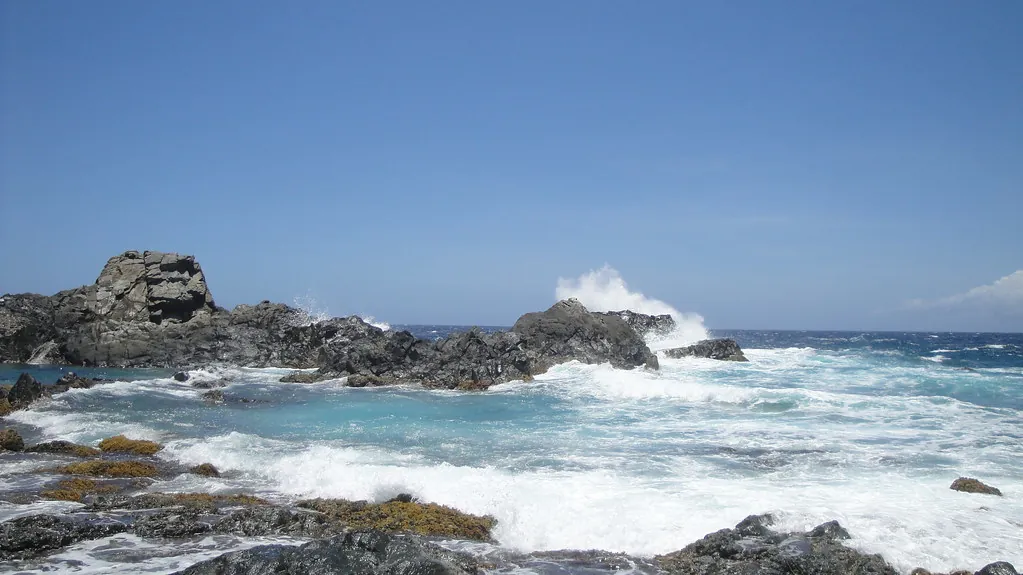
- Coastal drop-offs: The terrain around the pool is exposed, with steep edges and no continuous protective barriers. Keep the vehicle in the designated parking area and stay well back from cliff edges on foot.
Never drive around a closure barrier or ignore instructions from park staff. If rain, erosion or another hazard makes the route unsafe, change your plans. Arikok is a protected landscape, and attempting to bypass a closure can damage the environment as well as put you and other visitors at risk.
Parking at the Conchi Trailhead
Vehicles using the authorised route to Conchi generally stop in a rough dirt parking area above the steps leading down to the Natural Pool. This is a simple trailhead area rather than a formal car park with marked bays, attendants or guaranteed spaces. Park carefully within the established area, leave room for other vehicles to manoeuvre and keep clear of the access track.
Available space varies with vehicle size and how visitors have parked. The area is often described as holding roughly 20 to 30 vehicles, but that is an estimate rather than an official capacity, and there may be fewer usable spaces on a busy day. Arriving earlier in the morning generally gives you a better chance of finding space before the busiest part of the day.
There is no reliable basis for promising a fixed number of spaces or a particular opening-time availability. If the parking area is full, do not block the road or leave your vehicle on fragile vegetation while searching for room. Follow staff directions or return when a safe, authorised space is available.
What does parking cost?
Parking at the rough Conchi trailhead is generally described as free, with no separate parking ticket or staffed parking booth. The important distinction is that free parking does not mean the whole visit is free: access to Arikok National Park may require an entrance fee, and the rental vehicle, fuel or guided transport are separate expenses. Confirm current park admission charges and any temporary access arrangements with the official park authority before travelling.
Do not leave valuables in plain sight, and take your passport, wallet and other essential items with you when appropriate. Keep the vehicle locked, follow the rental company’s instructions about leaving the keys and do not leave food or rubbish behind. The remote setting is part of the appeal, but it also means you should avoid treating the parking area like a supervised beach car park.
From the Parking Area to the Natural Pool
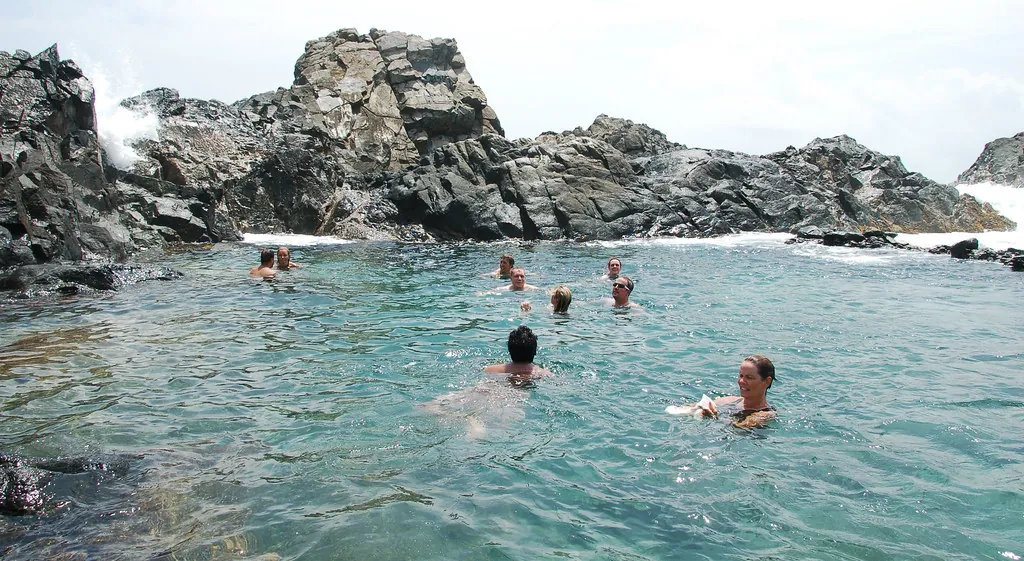
Once you have parked, the final approach is on foot. A flight of roughly 70 to 80 uneven stone steps is commonly described along the descent, though the precise count and condition may vary with the path. The steps lead towards the rocky coastline, where you can see the natural rock basin that gives Conchi its name. In Papiamento, conchi means shell, so think of nature’s own shell pool, carved into the coast and replenished by the sea.
Wear shoes with a secure grip for the descent and the return climb. The stones can be irregular, and the walk is harder in the midday heat, especially after swimming. Keep your hands free where possible, take care around other visitors and avoid rushing simply because someone behind you is moving faster.
The final stretch is also a reminder that parking close to the pool does not make the shoreline accessible to everyone. Visitors with limited mobility, balance concerns or difficulty with steps should assess the descent carefully before committing. For a fuller breakdown of the walking route, terrain and time needed, read our Conchi Natural Pool hiking guide.
Swimming conditions are a separate consideration from driving conditions. Waves can surge into the rocky basin, footing is uneven and there is no lifeguard stationed at the pool. Check the visitor rules and safety guide before entering the water, and leave the pool alone when the sea is rough.
Official Information to Check Before Driving
Road conditions, access restrictions and admission arrangements can change, so use official sources for the latest operational information. These resources are useful starting points before setting off across the park.
- Aruba National Park Foundation (Fundacion Parke Nacional Aruba): consult the park authority for park information, conservation guidance and visitor updates.
- Aruba Tourism Authority: use the official tourism website for general destination information and visitor planning.
- Government of Aruba: check official government information where regulations or public notices affect your visit.
- Aruba Tourism Authority, getting around: review general transport guidance before choosing a rental or alternative way to reach the park.
These links are starting points rather than a live guarantee that the Conchi track is open. Contact the park directly if you need confirmation of today’s access, the suitability of a particular vehicle or current admission charges.
When Self-Driving Is Worth It, and When to Choose a Guide
Drive yourself
Self-driving suits visitors who have a suitable vehicle, written permission to use the route and confidence on rocky terrain. You can set your own pace and combine Conchi with other authorised park stops, although you remain responsible for the vehicle and for checking road conditions.
Join a guided 4×4 tour
A guided safari is a sensible alternative if your rental agreement excludes unpaved roads, you are unfamiliar with off-road driving or you would rather concentrate on the landscape. Compare current departures, inclusions and cancellation terms on our guided tours page.
For many visitors, the most expensive mistake is trying to save money with a vehicle that is unsuitable for the track. A tyre failure, underbody damage or recovery from a remote stretch can cost far more than the difference between a standard rental and an authorised off-road vehicle. If the terms are unclear, choose another way to reach the coast rather than risking a disputed insurance claim.
Conchi is worth the dusty drive when the vehicle, route and conditions are right. Sort out the rental permission before you go, park only where authorised and give the rocky descent the same respect you gave the road.