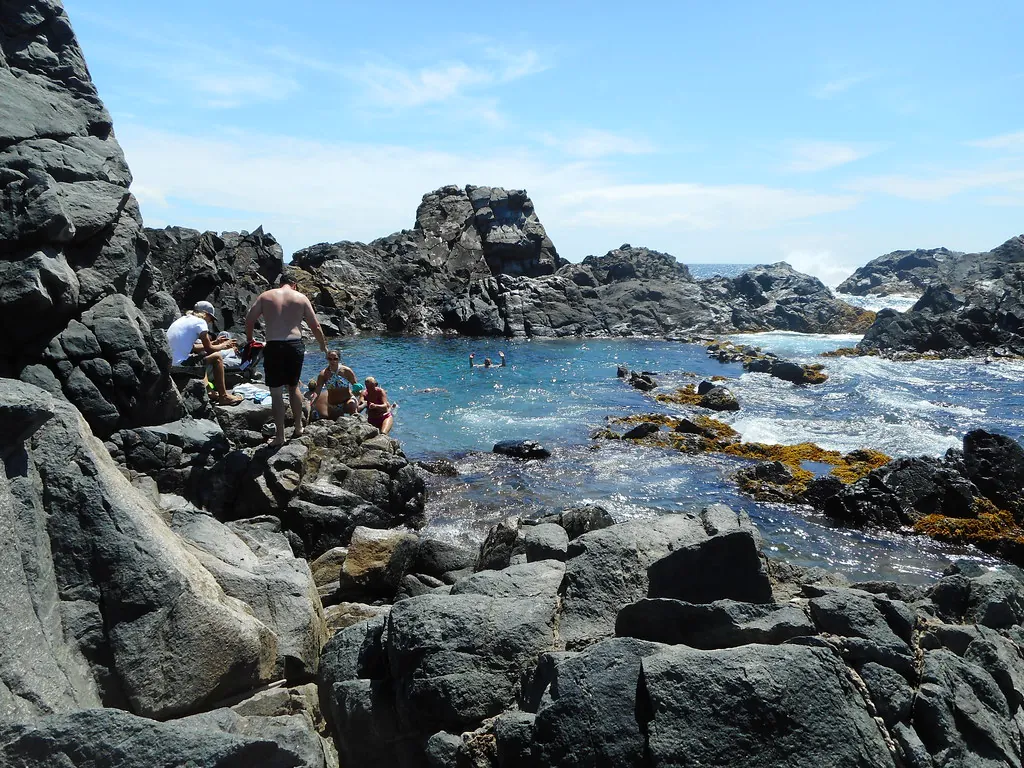
I park above Conchi most weekends, and the question I get asked more than any other is the boring one: what does this actually cost? So here is the whole money picture, from the single mandatory park fee to the taxi fare that surprises people, the rental insurance clause that catches them out, and the sandwiches worth buying in Santa Cruz before you climb the hill. Nothing here is a sales pitch. If you already know what you want and simply need to book it, the tickets and tours page carries the live options. This page is for working out the budget before you spend a cent.
The One-Minute Cost Snapshot
Pin this table to your phone. The figures below are what an adult visitor realistically hands over in 2026, priced in US dollars with rough euro equivalents, because the florin is pegged at 1.79 to the dollar and most operators quote in USD regardless of where you booked.
| Item | Typical Cost | Free or Paid |
|---|---|---|
| Arikok park entry, non-resident adult | ~$15 / €14 | Paid, mandatory |
| Arikok park entry, resident or child under 12 | $0 | Free with ID |
| Guided half-day jeep tour | $78–$139 / €70–€125 | Paid, park fee usually bundled |
| UTV or ATV, self-drive | $96–$349 per day | Paid, contract restrictions apply |
| Rental car, compact | $50–$65 per day | Paid |
| Rental car, 4×4 or Wrangler class | $110–$150 per day | Paid |
| Taxi, Palm Beach to the San Fuego gate | $45–$60 one way | Paid, metered by zone |
| Private transfer, per person | $25–$40 | Paid |
| Parking at the trailhead or visitor centre | $0 | Free |
| Water, reef-safe sunscreen, snacks | $15–$30 | Paid, buy before you go |
| Guide, driver or ranger tip | 15–20% of the tour price | Customary, cash preferred |
One line in that table deserves a caveat straight away. Aruba’s park authority reviews its tariff periodically, so treat the entry figure as close rather than nailed down, and confirm the current number on the official Arikok National Park website in the week before you fly.
The Arikok Entrance Fee: The Only Charge You Cannot Skip
Every non-resident adult entering Arikok pays one park fee, collected at the San Fuego gate on the road up from Santa Cruz or at the Daimari gate on the north coast side. Children under twelve walk in free, and island residents show ID and pay nothing at all. Staff take cash and card, US dollars go at par, and change frequently comes back in florins rather than dollars, which is worth knowing if you are counting coins for a tip later.
Your ticket covers the day you buy it and admits you once. Leave the park for lunch in Santa Cruz and come back, and you buy a second ticket. Keep the wristband visible on your arm, because the rangers at Dos Playa and the visitor centre do check, and arguing about it in the sun is nobody’s idea of a good afternoon.
What The Park Fee Covers, And What It Does Not
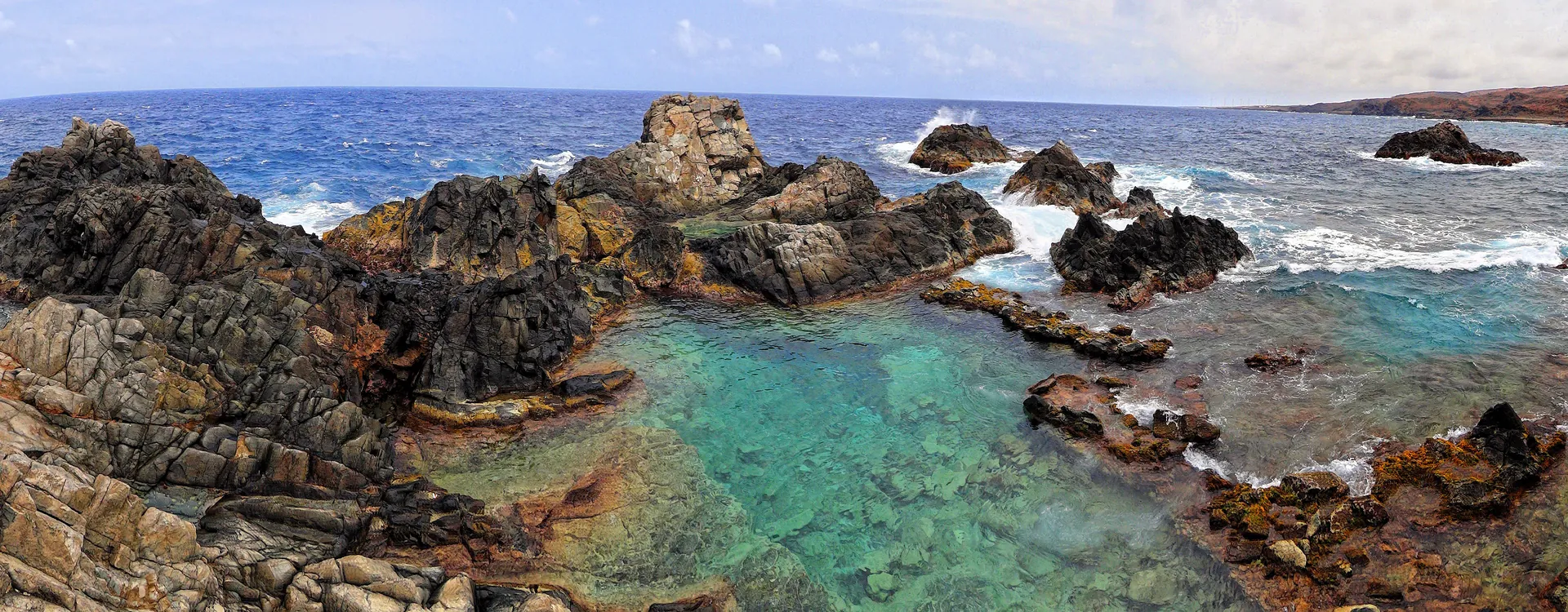
That single wristband opens the entire reserve: the Natural Pool at Conchi, the limestone caves at Guadirikiri and Fontein, the visitor centre at San Fuego, the long empty sweep of Dos Playa, the Daimari side, and every marked trail in between. It does not cover your vehicle, your guide, your water, or your composure on the Daimari track, which is a proper tumble-dryer ride in a vehicle that was never designed for it.
There is no separate Natural Pool ticket. This is the single most common misunderstanding I hear at the gate, usually from somebody who has been told online that they need to pay again at the top of the hill. Nobody charges you a second time to stand above the pool and look down at the water. If a stranger offers to sell you a Conchi pass in a car park, walk away and keep your wallet closed.
One wristband, whole park. No ranger waits at the top of the hill to charge you again.
Guided Tour Prices, Group Departures
A guided tour looks expensive beside a $15 park fee until you notice what has been folded into the headline number. Transfers from the hotel strip, a driver who knows where the rock shelf is, the park fee itself, cold water, sometimes snorkel gear and lunch. Strip those out and the gap narrows fast.
| Tour Type | Price Per Person | Notes |
|---|---|---|
| Half-day jeep safari, group departure | $78–$95 / €70–€85 | Park fee bundled by most operators |
| Full-day jeep with Baby Beach and lunch | $121–$139 / €108–€125 | Longest route, most stops |
| ATV or UTV convoy, self-drive | $96–$162 / €86–€145 | Two-seater machines, shared driving |
| Premium UTV, newest machines, longer route | $279–$349 / €250–€310 | Higher damage deposit |
| Private jeep charter, up to four guests | $211–$350 / €190–€310 | Per vehicle, not per person |
| Coastline horseback ride | ~$115 / €103 | Weight limits apply |
| Guided hike with snorkel stop | ~$60 / €54 | Cheapest way in with an expert |
Read the inclusions before you compare prices, because a handful of operators quote a low headline figure and then collect the park fee in cash at the gate. That is not a scam, just an accounting choice, and it turns a $78 tour into a $93 tour on the day. Ask directly whether the entrance fee sits inside the price.
What A Tour Price Actually Includes
Usually Included
- Round-trip transfer from the high-rise and low-rise hotel zones
- The Arikok park fee itself, on most but not all departures
- An English-speaking guide who grew up on the island
- Bottled water, occasionally a cooler of soft drinks
- Snorkel mask and fins on the swimming-focused trips
- Helmets and a safety briefing on ATV and UTV departures
Often Excluded
- Park entry, on a minority of budget jeep departures
- Hotel pickup outside the free zone, billed per person each way
- Fuel surcharges on longer private charters
- Damage deposit on self-drive ATV and UTV hire, held on card
- Lunch, unless the itinerary name says so
- Gratuities, which nobody adds automatically
Pickup is the line item that catches people. Hotels in Palm Beach and Eagle Beach fall inside the standard free radius; an Airbnb in Savaneta or Paradera usually does not, and the supplement runs $10–$20 per person each way. If you are staying down south, the maths often tips toward driving yourself or meeting the group at a central point.
Self-Drive Maths: Rental, Insurance And Fuel
Self-driving is the cheapest route to Conchi for two or more people, provided you read the insurance page properly. Daily rates in 2026 sit around $50–$65 for a compact, $75–$95 for a mid-size SUV, and $110–$150 for a Wrangler-class 4×4 or pickup. Weekly bookings knock 15–25% off, and the airport desks charge less than the hotel lobbies.
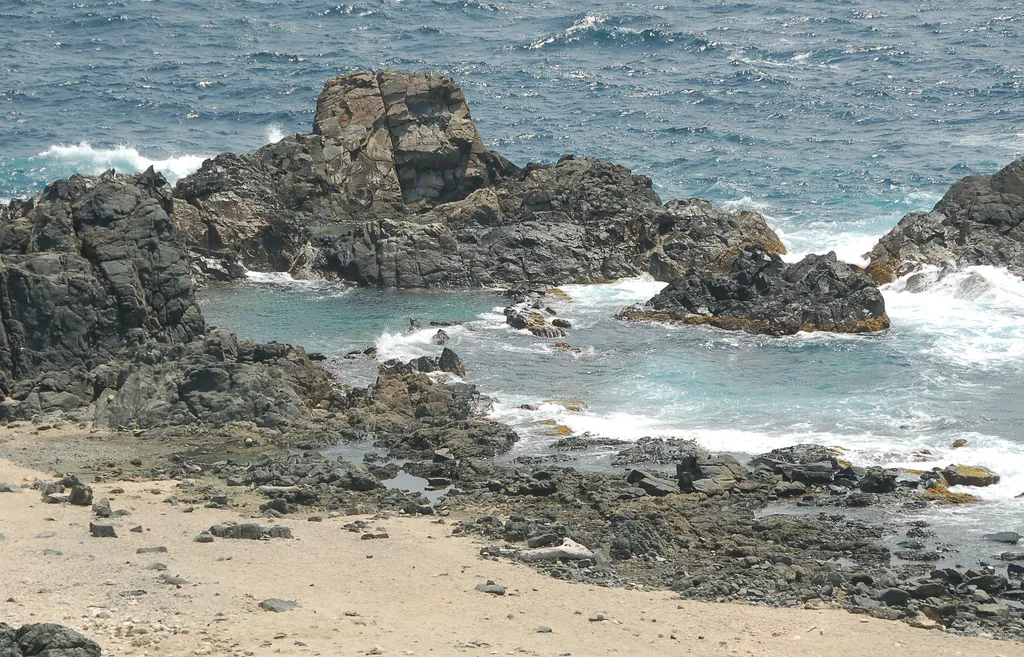
Here is the trap. Standard collision damage waivers on the island frequently exclude unpaved roads, and the road to Conchi is exactly that: a rutted, limestone-blasted track with loose edges and no forgiving shoulder. Some rental contracts forbid Arikok outright. Ask the question at the counter, get the answer in writing, and if the answer is no, either upgrade your cover or take a guided option instead. A cracked sump guard costs considerably more than the tour you skipped.
Fuel is modest. A round trip from Palm Beach through Santa Cruz and up to the trailhead runs roughly 65 kilometres, which is somewhere between $12 and $18 depending on what you hired. Top up in Santa Cruz or Oranjestad before the climb, because there is nothing resembling a petrol station near the park gates.
ATV, UTV And Buggy Hire
Half-day ATV and UTV hire starts near $96 per machine and climbs past $160 for the longer coastal routes, with premium UTVs priced per vehicle at $279 and above. Rates include a helmet, a briefing, and usually a guide who leads the convoy, so you are paying for navigation and access as much as for the vehicle.
Damage deposits sit on your card, typically $500 to $1,000, and they are released after the machine comes back intact. Two things bite first-timers: many rental contracts bar self-guided machines from Arikok’s interior tracks altogether, and the fine for taking one in against the rules lands on you rather than the rental company. If your heart is set on driving yourself to Conchi, book a supervised convoy where park access is part of the deal.
Taxi, Transfer And Bus: Getting There Without A Car
Taxi fares on Aruba are set by government zone rather than by the meter, which means the number you are quoted should be the number you pay. From the Palm Beach strip to the San Fuego gate expect $45–$60 one way, and understand that most drivers stop at the gate rather than attempting the track to the trailhead. That is not laziness; it is a reasonable mechanical decision.
- Private transfer: $25–$40 per person each way, bookable through your hotel
- Taxi to the gate, then walk or join a shuttle: cheapest hybrid, longest day
- Arubus to Santa Cruz for a couple of dollars, then a taxi for the final climb
- Full guided tour with hotel pickup: often cheaper than a return taxi once you add the park fee and the tipping
For two people a return taxi plus park fees lands close to the price of a half-day tour that includes transport, a guide, and the entrance fee. Run that comparison honestly rather than assuming DIY always wins. The transport hub has the full breakdown of each route if you want to weigh them side by side.
Parking Costs Nothing, Space Costs Patience
There is no parking charge anywhere in Arikok: not at the Conchi trailhead, not at the San Fuego visitor centre, not on the Daimari side. What you spend instead is time, because the trailhead lot holds a couple of dozen vehicles and tour convoys arrive in waves through the morning. Turn up before nine and you park without drama. Turn up at eleven in high season and you circle.
Manoeuvring on that gravel, plus how to judge whether your vehicle belongs up there at all, is covered in detail on the 4×4 drive and parking guide. I would rather you read it than reverse into a rock.
Water, Footwear And Sunscreen: The Spending Nobody Budgets For
Nothing is sold at Conchi itself. No kiosk, no drinks stand, no shaded hut. The nearest shop is whichever one you last passed, so buy before you commit to the track. A supermarket cooler in Santa Cruz or Oranjestad runs $15–$30 for a family; the same items from a visitor centre kiosk cost a third more and carry a third of the choice.
- Reef-safe SPF 50: about $12–$18 a bottle, and non-negotiable on that rock
- Water shoes or strappy sandals for the rocky entry into the pool
- Two litres of water per person minimum, more in the summer months
- A dry bag for phones and cameras, because the salt spray gets everywhere
- Cash for tips, since nobody carries a card reader up the hill
That list is also your packing shortlist. The Aruba packing guide explains what to leave at home, and the honest answer is most of your suitcase plus anything made of single-use plastic.
Tipping And Cash Mechanics
Tipping on Aruba runs 15–20% on tour prices and taxi fares. For a guide who has spent four hours hauling you over limestone and pointing out the rock arch, $5–$10 per person is the going rate and it lands well. Cash is king here; card readers do not reach the top of the hill.
The florin is fixed at 1.79 to the US dollar, dollars are accepted at par almost everywhere, and change often returns in florins. ATMs thin out badly once you leave Oranjestad and San Nicolas, so draw cash in town before you head east. For the wider picture on petty theft, card skimming and night-time common sense, the Aruba safety and scams guide covers it without the hysteria, and the Aruba Tourism Authority site keeps a current list of regulated taxi tariffs and visitor advisories.
What A Day Actually Costs: Four Scenarios
These are all-in totals per group, including park fees, transport, water, and a reasonable tip. They assume one visit to Conchi rather than a full island loop.
| Scenario | All-In Cost (USD) | All-In Cost (EUR) |
|---|---|---|
| Solo traveller, rental car, DIY | $95–$140 | €85–€125 |
| Couple on a group jeep tour | $180–$280 | €160–€250 |
| Family of four, self-driving | $180–$260 | €160–€230 |
| Private charter for four | $520–$760 | €470–€680 |
A family that drives itself spends roughly what a couple spends on a shared tour, which tells you most of what you need to know about the economics. The private charter only makes sense if you want the itinerary to bend around you, and on that front it delivers properly.
Money-Saving Plays, And The Upsells To Refuse
- Rent one vehicle and split it between four people rather than booking four tour seats.
- Buy water and snacks at a supermarket in Santa Cruz, not at the park gate.
- Book direct with the operator when you can; resale platforms add a margin on identical trips.
- Skip the premium UTV unless you specifically want the newest machine and the longer coastal route.
- Say no to the photo package, the extra snorkel rental, and the second island tour bundled at a discount you did not ask for.
- Go early. The light is better, the lot is empty, and the crowds have not yet arrived in convoy.
Costs for Conchi are not complicated once you separate the mandatory from the optional. One park fee, one way of getting up there, one bottle of water you should have bought an hour earlier. Everything else is a choice, and knowing which choices matter is most of the battle. When you are ready to turn the budget into a booking, start on the tickets and tours page, then check the hiking guide and the visitor rules before you set the alarm.
For the wider planning picture, the Aruba Tourism Authority publishes current visitor information, the Government of Aruba portal lists official fees and regulations, and the Arikok National Park authority is the only source worth trusting on entrance tariffs and closure notices.