Conchi means shell, so think nature’s own shell pool: a rock basin on Aruba’s north-east coast where the Caribbean throws itself over a lava wall and settles into something swimmable. That arrangement is glorious on a calm morning and genuinely hostile when a north swell is running. Nobody sells you a ticket at the rim, nobody rakes the pool at dawn, and nobody blows a whistle when you make a poor decision. So here is the briefing I give friends who ask what they are actually allowed to do out there, delivered the way I would say it over a cold drink in Savaneta with sand still in my sandals.

The Short Version (Rules at a Glance)
If you read nothing else on this page, read this list. It takes twenty seconds and it covers the things that actually go wrong at Conchi.
- There is no lifeguard, no patrol and no flag system. You are the safety plan for your group.
- Water shoes with real grip. Flip-flops on wet volcanic rock are an accident waiting to happen.
- The Arikok gates close at 16:00, and rangers begin sweeping the tracks well before that.
- Drones need a permit before you fly, not after.
- No glass, no fires and no BBQs anywhere in the park.
- Pack out everything you carried in, including fruit peel and cigarette ends.
- Conchi shuts whenever surge makes the mouth of the basin dangerous, and the decision is not yours to make.
- Leave the iguanas, goats and the endemic Aruba Island rattlesnake alone. Feeding wildlife is a fineable offence.
The fee to enter Arikok, the tour prices and the rental costs sit on our costs and passes page, because this page is about conduct rather than budgets. What matters here is that the rules exist for reasons you can picture, and the next few sections explain the picture.
Where the Rules Come From (and Who Enforces Them)
Two rule sets overlap at Conchi, and visitors who mix them up get caught out. The first is the national park ordinance that governs Parke Nacional Arikok, written into Aruban law through the Government of Aruba and shaped around conservation of the island’s dry forest, geology and wildlife. The second is plain open-water judgement, since the pool itself is unsupervised and always has been. Rangers at the entrance gates, the on-site visitor centre and the Aruba Conservation Foundation carry the authority for the first set. Nobody carries it for the second, which is precisely the problem.
I have been stopped twice on the dirt tracks for driving a line the rangers did not like, and both times the conversation was courteous and final. Fines are real, permits are checked, and the rental agreement you signed in Oranjestad becomes void the moment you leave a marked route. The island takes its east coast seriously because the east coast does not forgive much. Broader guidance on staying out of trouble off the beach sits in our Aruba safety piece, which pairs well with this one.
Rule One: There Is No Lifeguard at Conchi
Nobody watches the water at the Natural Pool. There is no tower, no patrol boat, no siren and no rota of trained swimmers waiting on the rocks above you. On a busy morning the pool can hold thirty people and every single one of them is responsible for themselves. Weak swimmers should stay in the shallow end of the basin, near the entry shelf, and children need an adult within arm’s reach at all times rather than a parent watching from the rim with a camera.
Alcohol is the other half of this rule. There are no bars, no vendors and no coolers-for-hire at Conchi, so anyone drinking has carried it in themselves and will be swimming impaired in a rock pool with no supervision. I have watched a grown man misjudge the exit shelf after two beers and reopen a cut on his shin that he had no idea was there. Save the cocktails for Oranjestad.
Rocky Entry, Uneven Floor and What to Wear
The way into the pool is over rock, and the rock is not arranged for your comfort. There is a sloping apron at the main entry point with an algae film that turns slick the moment it gets wet, and the descent to reach it involves loose scree that shifts underfoot. Barefoot is a bad idea. Flip-flops are worse, because they slide off exactly when you need them most.
- Closed-toe water shoes with a rubber tread are the best option, and reef-safe sandals with heel straps are a workable second.
- Bring a dry pair of trainers or sandals in the vehicle for the drive back. Wet shoes plus a 4×4 tumble-dryer ride is an unpleasant combination.
- Watch for sea urchins in the crevices near the outer wall, and keep your hands off ledges you cannot see clearly.
- Test each foothold before you commit your weight. The algae apron has fooled better swimmers than you.
- If you are carrying a phone or camera, use a wrist strap. The floor of the pool is not a recovery service.
Depth Fluctuations, Surge and Currents
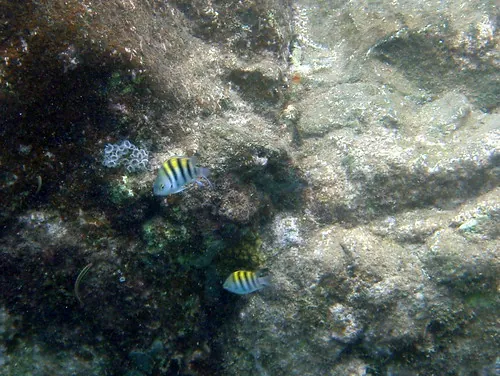
Conchi is a sea-fed basin, which means it has no fixed depth and no fixed mood. On a calm morning the middle sits around 1 to 3 metres, deep enough to swim properly, shallow enough to stand in places. When a north swell arrives, water piles over the outer rocks hard enough to turn the mouth of the basin into a washing machine, and the surge inside can knock an adult off their feet without warning. The tide shifts things further, so a pool you paddled in at 09:00 may behave completely differently by 14:00.
Read the water before you get in. If spray is clearing the outer wall and you can hear the crash from the car park, that is a closed day in all but name. Our swimming and depth guide breaks down what the water does hour by hour, including the best tide windows, so I will not repeat the full detail here. The short version is that the pool rewards patience and punishes bravado.
A calm day at Conchi feels like a secret. A swell day at Conchi feels like a lesson.
Who Should Not Get In
Skip the swim entirely
- Non-swimmers and anyone who cannot tread water for five minutes.
- Children without a strong adult already in the water with them.
- Anyone with a back, neck or heart condition, since surge lifts and drops you without notice.
- Anyone who has been drinking or using anything that slows reaction time.
- Anyone who cannot climb out over wet rock without a hand from somebody else.
Get in, but swim to a plan
- Reasonable swimmers: stay inside the basin and away from the outer lip.
- Families: set a visible boundary, such as the shallow shelf, and hold it.
- Snorkellers: fins and surge do not mix well in a confined pool, so keep them off.
- Older visitors: pick the calmest hour of the morning and keep the session short.
- Groups: designate one person on the rocks as a spotter rather than everyone swimming at once.
Jumping, Diving and the Cliff Edges
Rangers ask visitors not to jump from the ledges around the pool, and the request comes from an injury record rather than a taste for rules. Water levels change through the day, submerged rock sits below an innocent-looking surface, and a jump that cleared comfortably for somebody at 10:00 can land on stone by noon. Diving head-first is worse still, because the deepest pocket of the basin is not always where you think it is.
Climbing the outer cliff faces for a photograph is separately prohibited, and it is the one place where a slip has no second chance. If you want the elevated shot, walk the marked trail to the designated viewpoint instead. Our photo spots guide lists the angles that give you the whole basin without putting a boot on loose volcanic rock.
Two things I never leave the car without at Conchi: grippy water shoes and more water than I think I need. Everything else is optional.
Sun, Heat and Water: Rules Nobody Enforces But Everyone Should Follow
There is no shade at Conchi, no fresh water tap, no toilet and no kiosk. The pool sits in open scrub with the sun directly overhead for most of the day, and the dark rock radiates heat back at you while you dry off. Between roughly 11:00 and 14:00 the combination gets serious, particularly for children and anyone who has flown in within the last 48 hours.
- Carry at least 2 litres of water per person. Not a shared bottle, a personal one.
- Reef-safe SPF 50, reapplied after swimming. Reef-safe matters here because the pool flushes straight into the marine park.
- A hat and a long-sleeved shirt beat a sun canopy you have to carry down the trail.
- Watch your group for heat exhaustion: headache, dizziness, cold clammy skin, sudden irritability. Get them to shade and water and abandon the rest of the plan.
- Eat something salty before you swim. Cramps in a rock pool with a swell running are no joke.
Leave No Trace: What You Cannot Take, Touch or Feed
Arikok protects one of the last stretches of Aruba’s original dry forest, and the pool sits inside that protected zone. Taking rocks, shells, coral fragments or plants home as souvenirs is illegal and the rangers do check bags at the gate on busy weekends. Touching the pool walls damages the algae and invertebrate life that clings to them, which is another reason to keep your hands off the entry apron and use your feet.
Feeding wildlife is the offence visitors commit most often without realising it. The iguanas near the car park have learned to beg, the goats on the road will approach a parked 4×4, and the endemic Aruba Island rattlesnake is shy, venomous and protected. Human food makes all three sick, and hand-feeding an iguana is how people get bitten. Take the photograph, keep the sandwich.
Drone Rules and Photography Permits
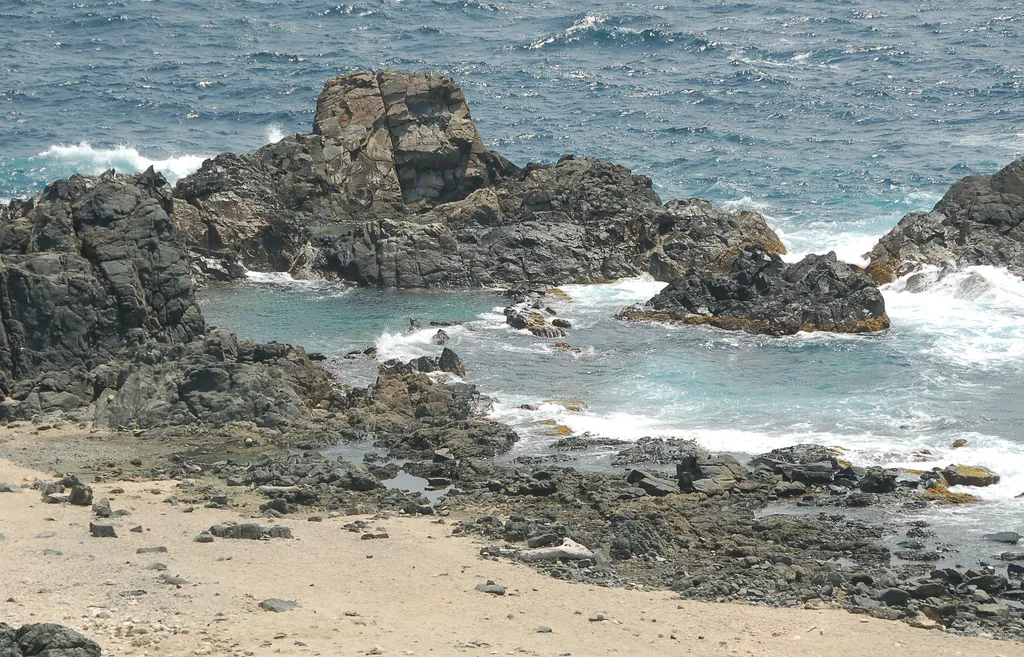
Flying a drone in Arikok is a permit question, not a grey area. Commercial and recreational flights over the park require authorisation from the Department of Civil Aviation Aruba, and filming inside a protected area brings the park authority into the same conversation. Turning up with a drone in your bag and launching it over the pool is the fastest way to end a good day with a fine.
There is a practical problem too. The cliff walls around Conchi bounce GPS signals, so drones lose position hold exactly where you least want that to happen, and a lost aircraft usually ends up in the water or on protected rock. Handheld photography is unrestricted, and the viewpoints on the marked trail give you the whole basin in one frame.
Vehicle Rules: Staying on Designated Tracks
Driving off the marked routes is prohibited across the entire park, and the phrase covers more than most people assume: no cutting across open ground to reach a photo stop, no parking on vegetation, no tearing up the dunes towards the coast and no driving onto the beaches at all. Fines apply, and your rental agreement is void the moment you leave the trail, which means an insurance claim disappears with it.
Quads, UTVs and ATVs follow the same rule as a 4×4, and rangers do pull people over. If you want to know which tracks are open, which vehicles are permitted and where the trailhead parking sits, that detail lives in our 4×4 and parking guide. Guided options exist for anyone who would rather not wrestle with a manual gearbox on loose coral, and you can compare them on the tickets and tours page.
Pets, Alcohol, Fires and Other Prohibitions
| Prohibited | Why the rule exists | Consequence |
|---|---|---|
| Pets of any kind | They disturb nesting birds, lizards and the endemic rattlesnake | Turned away at the gate |
| Glass containers | Broken glass on rock is invisible and cuts feet and wildlife | Confiscated, fine possible |
| Open fires and BBQs | Dry forest plus trade winds equals uncontrollable scrub fire | Fine and removal from park |
| Alcohol before swimming | No lifeguard, impaired judgement, rocky exit | Your risk entirely |
| Drones without a permit | Protected airspace and nesting season disturbance | Fine plus equipment seizure |
| Off-road driving | Damages soil crust that takes decades to recover | Fine, rental insurance void |
| Feeding wildlife | Makes animals ill and aggressive toward visitors | Fine |
| Removing rocks, shells, coral or plants | Protected national park resources | Fine, bag checks at exit |
| Climbing outer cliff faces | Loose volcanic rock and no safe rescue access | Ranger removal from site |
Closures and Alerts: The Natural Pool vs. the Cave Pool
These are two separate stories and visitors keep braiding them together. Conchi closes temporarily when swell, wind or heavy rain makes the basin unsafe, and the park can shut individual 4×4 tracks after a downpour because the roads turn to soup. Those closures lift once conditions settle, usually within a day or two, and rangers or the visitor centre will tell you the current status when you arrive. Arikok also publishes alerts through its own channels and through the Aruba Tourism Authority, so a quick check before you drive saves a wasted morning.
The Cave Pool near Andicuri is a different site with a different, long-running closure status, and it has nothing to do with the Natural Pool being open or shut. If a tour description mentions a cave pool, check which cave is meant, since Aruba also has the Guadirikiri and Fontein caves that remain open to visitors. When Conchi itself is closed, the sensible pivot is the rest of the park or a coastal alternative, and our transport guide lays out the realistic Plan B options.
Emergency Protocol: What to Do If Something Goes Wrong
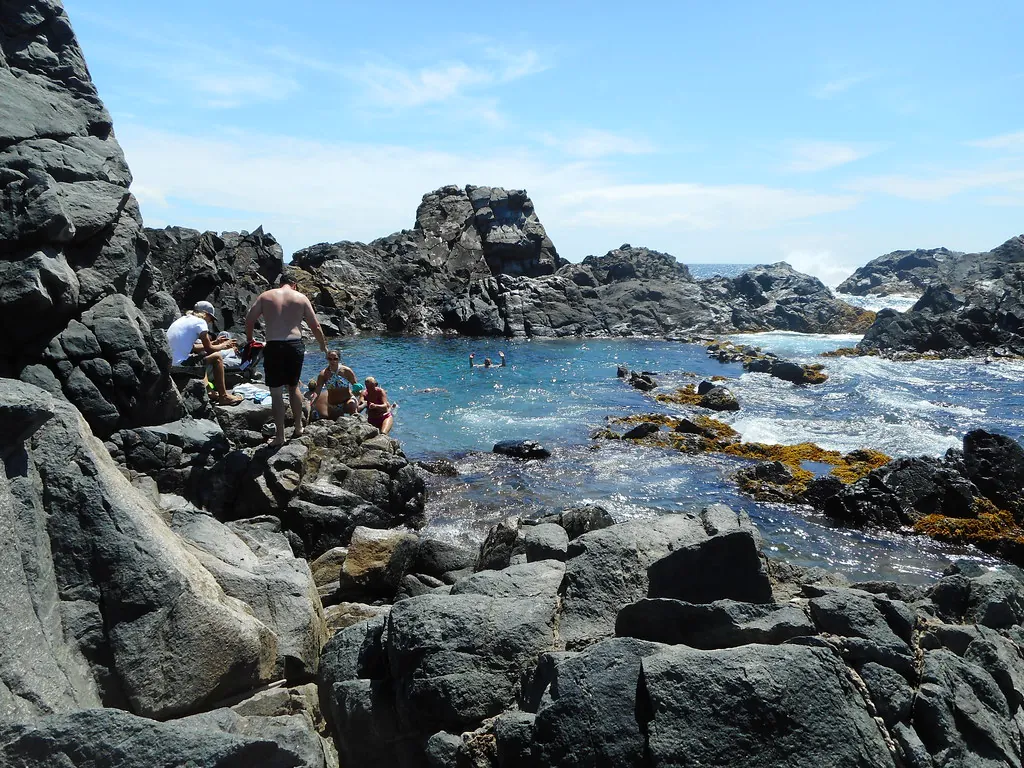
Mobile coverage inside the park is patchy and drops out entirely in the rocky bowls around the pool, so know the sequence before you need it. The national emergency number in Aruba is 911, and the nearest full hospital is Dr. Horacio E. Oduber in Oranjestad, roughly 30 to 45 minutes by road from the park entrance depending on where you are on the tracks.
- Get the person out of the water and onto flat rock, away from the surge line.
- Send one clear-headed member of the group up the trail towards the car park or visitor centre to find a ranger.
- Dial 911 if you have signal, and give the exact location as Conchi, the Natural Pool, inside Parke Nacional Arikok.
- Describe injuries plainly: suspected spinal injury, head wound, breathing difficulty. Say it once, clearly.
- Keep the casualty warm and still, and do not move anyone with a suspected neck or back injury.
- Stay with them until a ranger or ambulance crew reaches you. Do not send the whole group away.
Rangers patrol the tracks and carry radios, which makes them your fastest link to medical help in most scenarios. Telling them at the gate where you plan to swim, and roughly when you expect to be back, takes ten seconds and gives someone a reason to come looking.
Frequently Asked Questions
Is there a lifeguard at the Natural Pool in Aruba?
No. Conchi has no lifeguard, no patrol and no flag system at any hour of any day, which makes it the single most important fact on this page. That means no one will warn you before the surge picks up, no one will count heads when the pool fills with thirty swimmers, and no one will reach you quickly if you get into trouble. Swim with a buddy, set your own limits before you get in, and treat every minute in the water as unsupervised.
Can you swim in the Natural Pool in Aruba?
Yes, swimming is allowed at Conchi whenever the park has the site open, and on a calm day the basin is one of the best natural swims in the Caribbean. The catch is that permission and safety are two different things. The pool closes when swell makes the mouth dangerous, the entry is over slippery rock, and swimming is a poor idea for non-swimmers, young children without a strong adult, and anyone who has been drinking. If you want the full picture of what the water does through the day, the swimming and depth guide covers it in detail.
How deep is the Natural Pool (Conchi) in Aruba?
Conchi holds roughly 1 to 3 metres (3 to 10 feet) of water, and the depth changes with swell, tide and the amount of water pushing over the outer rocks. The deepest pocket sits near the middle of the basin, while the shelf beside the main entry is shallow enough to stand in on a settled day. After a north swell the whole basin can deepen noticeably and the surge inside becomes strong enough to move an adult off their feet.
Why is the Cave Pool in Aruba closed?
The Cave Pool near Andicuri is a separate site from Conchi and has stayed closed to visitors for years because of safety and conservation concerns, so its status has nothing to do with whether the Natural Pool is open. Visitors regularly conflate the two, then assume Conchi is shut when they see an old notice about the Cave Pool. Aruba’s Guadirikiri and Fontein caves remain open to the public, and if a tour description mentions a cave pool, confirm which site is meant before you book.
Do you need water shoes for the Natural Pool?
Yes, grippy water shoes are the single most useful thing you can bring to Conchi, and barefoot entry is the most common avoidable mistake visitors make. The main entry apron carries an algae film that turns slick when wet, the approach trail has loose scree, and urchins sit in crevices near the outer wall. Flip-flops fail at exactly the wrong moment, so choose closed-toe shoes with a rubber tread and pack a dry pair for the drive home.
Can you jump off the rocks at the Natural Pool?
No, jumping and diving from the surrounding ledges are against ranger guidance because of the injury record at the site. Water levels shift through the day, submerged rock sits just below the surface, and the landing zone that looked deep from above may not be. Climbing the outer cliff faces for photographs is prohibited outright, and the marked trail to the designated viewpoint gives you the same view with a fraction of the risk.
Can you fly a drone at Arikok National Park or over Conchi?
No, casual recreational drone flights over Arikok and the Natural Pool are not allowed without authorisation from Aruba’s Department of Civil Aviation, plus the park’s own filming consent. Beyond the paperwork, the cliff walls around the basin scramble GPS signals and cause position-hold failures right where a lost aircraft would land in protected water. Leave the drone in the hotel safe and shoot from the marked viewpoints instead, which our photo spots guide maps out.
What happens if the Natural Pool is closed when I visit?
When Conchi closes for swell or weather, the park normally stays open and the rest of Arikok remains visitable, including the caves, the dunes and the coastal viewpoints. Closures at the pool usually lift within a day or two once conditions settle, and rangers at the gate can tell you the current status the moment you arrive. Track closures after heavy rain are separate and can affect the 4×4 routes even when the pool itself is fine, so build a flexible day rather than a fixed timetable. The transport guide lists the realistic alternatives.
The rules at Conchi are not there to spoil a morning. They exist because the pool is wild, unsupervised and beautiful in equal measure, and because the people who know it best have watched what happens when visitors treat it like a hotel lagoon. Bring the right shoes, bring more water than you think you need, keep your group inside its limits, and you will come back dusty, sunburnt and grinning, exactly as you should.